Welcome to buuda infrastructures and visualizers llp

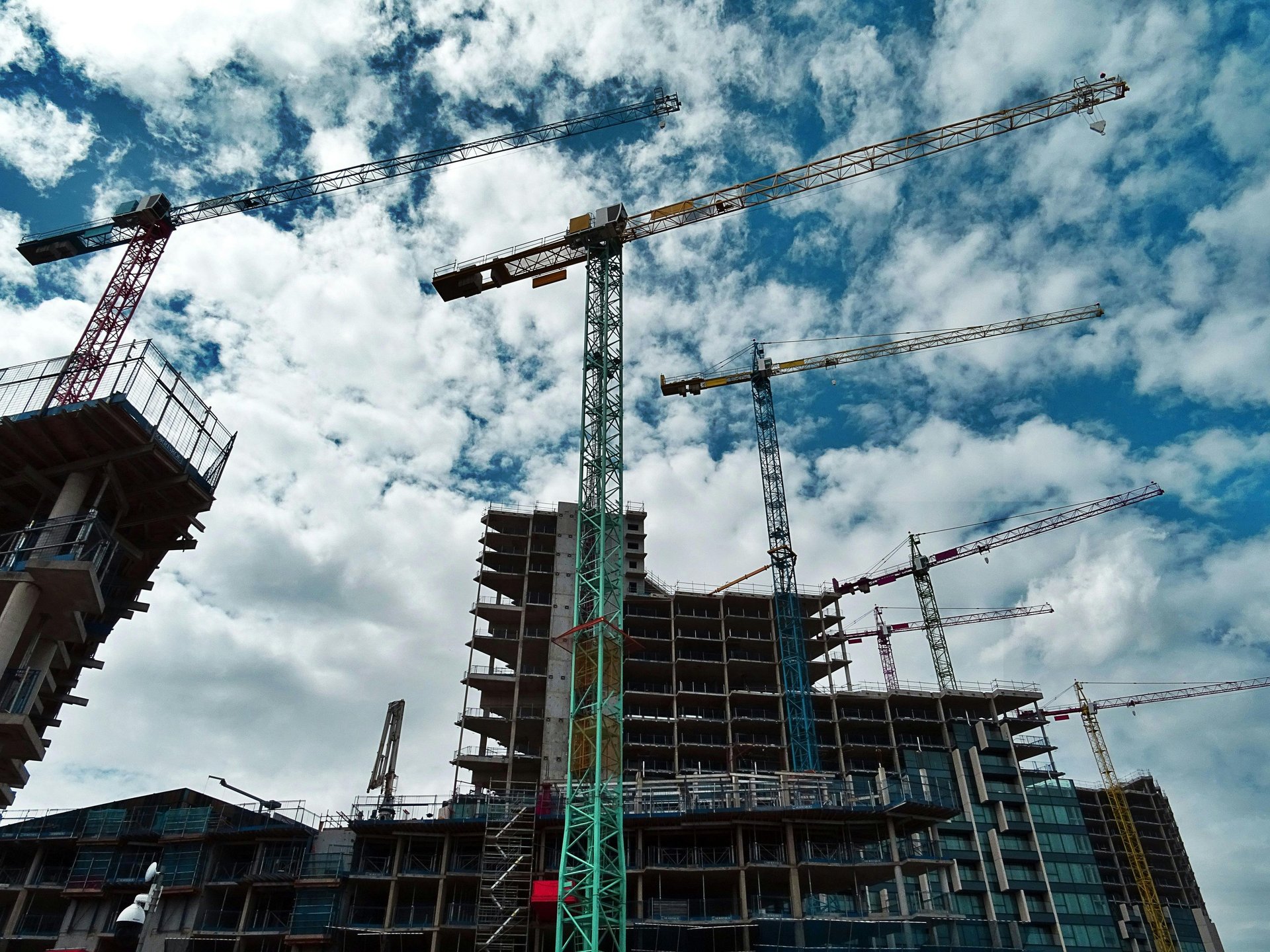
Constructing the Future: Contemporary Building Techniques Creating Delhi NCR's Skyline.
7/23/20252 min read
One of India's fastest-growing metropolises, Delhi NCR, is changing quickly to accommodate its expanding population and changing urban environment. Modern construction technologies that strike a balance between strength, sustainability, and speed are driving this change. Let's examine the main contemporary building techniques and supplies that are redefining Delhi NCR infrastructure at the moment.
1. Prefabricated and precast construction
It is utilized in government housing projects, flyovers, hospitals, and metro stations.
Rapid urban development is being driven primarily by precast and prefabricated construction methods. This approach significantly reduces time and pollution by producing elements such as walls, beams, and slabs off-site and assembling them on-site.
Benefits:
Quicker building
Excellent quality assurance
Decreased dust pollution and site congestion
2. Mivan Shuttering Technology
A contemporary aluminum formwork system that makes seamless, monolithic concrete constructions possible.
Uses include large-scale residential complexes, affordable housing, and high-rise apartments.
3. Sustainable & Green Construction Methods
Delhi NCR at Work:
Delhi NCR Metro's elevated tracks and tunnel linings are made of precast segments.
Precast wall and slab panels are used in DDA Housing Projects to ensure consistent quality and speed of completion.
Benefits:
Quick cycle of construction
Smooth concrete surface
Increased durability of the structure
Delhi NCR at Work:
Widely used in DDA housing projects and PM Awas Yojana, aiding in the achievement of significant housing targets and strict deadlines.
Sustainable building is more than just a fad in a city that is struggling with water scarcity and air pollution; it is essential.
Common Green Practices:
Low-VOC paints to lessen air pollution indoors
Windows with double glazing to reduce energy loss
Integration of solar panels and rainwater harvesting
Passive cooling systems and green roofs
Delhi NCR at Work:
Two excellent examples of energy-efficient structures are the new AIIMS buildings and the Delhi Secretariat.
Accreditations:
The Indian Green Building Council, or IGBC
Green Rating for Integrated Habitat Assessment, or GRIHA
4. Underground Metro Construction: Tunnel Boring Machines (TBMs)
TBMs are becoming increasingly important as Delhi NCR's metro system grows underground.
Benefits:
Minimal disturbance of the surface (perfect for crowded urban areas)
Extremely accurate and secure
24/7 operation, no matter the weather
Delhi NCR at Work:
TBMs are widely used in Delhi Metro Phases 3 and 4.
There are several TBMs buried beneath the city along the Janakpuri West–RK Ashram corridor.
5. Composite Construction & Steel Structures
Steel and composite materials are now widely used in Delhi's modern architecture to create stronger, quicker structures.
Benefits:
Strong but lightweight
Increased resilience to earthquakes
supports designs that are taller and more flexible.
Delhi NCR at Work:
Two prime examples of this building trend are the recently constructed Bharat Mandapam at Pragati Maidan and IGI Airport Terminal 3.
6. Digital Integration & Smart City Technologies
By embracing tech-driven urban management and construction, Delhi is becoming a smart city, particularly in the New Delhi Municipal Council (NDMC) area.
Important Technologies:
Using Building Information Modeling (BIM) to ensure precise design
Building management systems based on the Internet of Things
Security, HVAC, and lighting automation
Delhi NCR at Work:
Parts of Lutyens' Delhi already have sensor-based parking, real-time traffic systems, and smart street lights.
7. Self-Compacting & High-Performance Concrete
Delhi builders are now employing creative concrete solutions to satisfy the requirements of heavy infrastructure, such as flyovers and expressways.
Benefits:
Enhanced robustness and resilience
Lower upkeep expenses
Improved flow into intricate formworks
Delhi NCR at Work:
For long-lasting results, high-performance and self-compacting concrete are used in the Barapullah Elevated Corridor and Signature Bridge.
Conclusion
The combination of smart technology, sustainable practices, and effective construction techniques is causing Delhi's skyline and infrastructure to change quickly. These contemporary methods will be essential to creating a future capital that is faster, greener, and more intelligent as the city grows.